


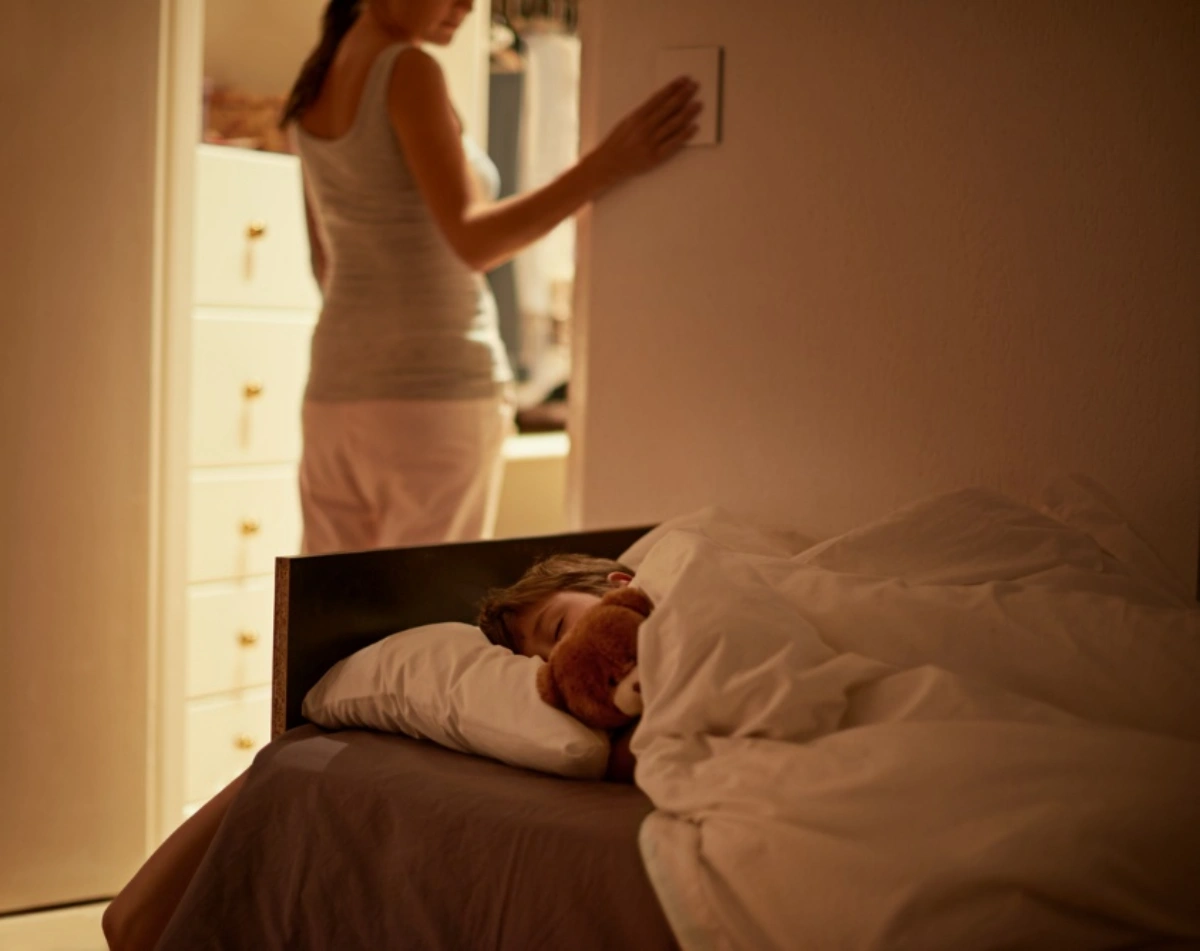
You check on your child before heading to bed and hear a sound you were not expecting: grinding. And it sounds like it is coming from those little teeth.
If you have heard your child grinding their teeth while they sleep, you are certainly not the only parent to wonder what is going on. The sound can be surprisingly loud, especially when the rest of the house is quiet. You may wonder whether your child is hurting their teeth, why they are doing it, and whether you need to do something about it.
Teeth grinding in children, also called bruxism, is very common, and it is often brushed off as a phase kids will simply outgrow. At McMurphy Pediatric Dentistry, we like to say that common does not always mean normal. Nighttime grinding is often a clue about how your child is breathing while they sleep, and that is where we start looking.
We never want grinding to feel scary. We do want you to know what it may be telling you, what to watch for, and why the answer is usually about more than protecting the teeth.
What Is Teeth Grinding in Children?
Bruxism refers to grinding or clenching the teeth. Children can do this while they are awake, but parents often discover it at night.
The funny thing is that your child probably has no idea they are doing it. You may be the one losing sleep over the sound while your child sleeps right through it!
 Besides hearing the grinding, you may notice:
- Teeth that appear worn or flattened
- Chipped or damaged teeth
- Tooth sensitivity
- Jaw soreness or discomfort
- Headaches, particularly after waking
- Complaints that the face or jaw feels tired
Not every child who grinds their teeth develops these problems. But even when the teeth look fine, the grinding itself is worth paying attention to, because the reason behind it often matters more than the wear.
Why Does My Child Grind Their Teeth at Night?
There is no single cause of pediatric bruxism, and several factors can overlap in the same child. As an airway-focused practice, we consider breathing first, because it is one of the most common and most overlooked reasons children grind. Here are the top reasons we see.
1. Sleep-Disordered Breathing and Airway Issues
This is the first thing we look for. Enlarged tonsils or adenoids, allergies, chronic nasal congestion and obstructive sleep apnea (OSA) can make it hard for a child to breathe comfortably through the nose at night. When the nose is blocked, children breathe through their mouths, and during sleep the tongue and lower jaw can drop back toward the throat and narrow the airway.
Grinding is believed to be one of the body’s protective reflexes. Clenching and pushing the jaw forward tightens the muscles around the airway and pulls the tongue away from the throat, helping reopen the airway so your child can keep breathing. In other words, the grinding may not be the problem itself. It may be your child’s body working hard to breathe.
That is why we would like to know if you are also noticing:
- Regular snoring or noisy breathing
- Mouth breathing during sleep or during the day
- Restless sleep, frequent waking or unusual sleeping positions
- Difficulty breathing comfortably through the nose
- Bedwetting after your child had been staying dry at night
- Waking up tired or cranky, or being hard to wake
- Trouble focusing, hyperactivity or mood changes during the day
2. Dental Growth and Teething
In toddlers and young children, incoming baby teeth or the transition to permanent teeth (around ages 6 to 8) can cause localized discomfort. Children often grind without realizing it to help adjust to a changing bite or soothe sore gums. This kind of grinding tends to come and go with each stage of tooth eruption. If it happens most nights or continues well beyond a teething phase, we want to take a closer look at breathing.
3. Stress and Emotional Tension
Just like adults, children can process daytime anxiety, such as school pressures, family changes or a busy routine, by physically releasing tension during sleep. Stress and breathing are often connected, too. A child who is not getting restful sleep because of a breathing problem may seem more anxious, irritable or emotional during the day. Before we assume grinding is only stress, we want to make sure your child is truly sleeping well.
4. Neurological and Developmental Factors
Children with neurodevelopmental conditions such as ADHD, autism spectrum disorder or cerebral palsy experience higher rates of bruxism, likely because of differences in how the nervous system regulates muscle activity. Certain stimulant medications used for ADHD can also contribute. (Please do not change any medication without talking with your child’s physician.) It is also helpful to know that poor sleep from sleep-disordered breathing can cause daytime symptoms that look a lot like ADHD, including trouble focusing, hyperactivity and impulsivity. For these children, a careful look at sleep and breathing is especially important.
5. Environmental Triggers
Exposure to secondhand smoke, lots of screen time in the evening, or caffeine close to bedtime (including sodas and some teas) can stimulate the nervous system and increase nighttime clenching. Secondhand smoke and household allergens can also irritate the nose and throat and add to congestion, which brings us right back to breathing.
Because these factors so often overlap, we look at the whole picture: your child’s teeth, jaw growth, tonsils, tongue posture, breathing habits and sleep.
Can Grinding Damage My Child’s Teeth?
This is usually the part parents are most worried about. When you hear that grinding sound from down the hall, it is easy to imagine what it must be doing to those teeth.
Frequent or forceful grinding can lead to excessive tooth wear, sensitivity, chipped teeth or discomfort in the jaw and surrounding muscles. Some wear on baby teeth does not necessarily mean treatment is needed, but once permanent teeth begin to erupt, it becomes especially important to watch for signs of excessive wear or damage.
We check for this during your child’s dental visits by looking at the amount and pattern of wear. Just as important, we look for the reason behind it. Even when the teeth look healthy, we want to understand why the grinding is happening.
Why Can’t My Child Just Wear a Night Guard?
Parents often ask about night guards, since they are commonly used for adults who grind. For children, a night guard usually is not a practical option, and even when one could be made, it does not treat the root cause. Here is why:
- Children’s mouths are constantly changing. Baby teeth are loosening and falling out, permanent teeth are coming in, and the jaws are still growing. A guard that fits today may not fit in a few months, and a rigid appliance covering the teeth can interfere with normal tooth eruption and jaw development.
- A night guard protects the teeth, not the airway. If your child is grinding because their body is working to keep the airway open, a guard may cushion the teeth while the breathing problem continues. A bulky appliance can also take up space the tongue needs, which is the opposite of what a child with a narrow airway needs.
- It can hide the warning sign. Grinding is often a symptom. Muffling it can delay finding and treating the real issue during the years when a child’s growth gives us the best opportunity to help.
Over-the-counter night guards are designed for adults and are not something we recommend for children.
Treating the Root Cause
Our goal is not just to quiet the grinding. It is to understand why it is happening and help your child breathe, sleep and grow well.
Your child does not have to go far for that help. Along with Dr. Austin McMurphy, our team includes a myofunctional therapist and a myofascial therapist right here in our office. Our myofunctional therapist works with children on the muscles of the tongue, lips and face to support nasal breathing and healthy oral habits. Our myofascial therapist helps release tension in the jaw, face and neck muscles that grinding and clenching can leave behind. Working together, they and Dr. Austin can address both the cause of the grinding and the strain it puts on your child’s muscles.
Depending on what we find, next steps may include:
- An airway, sleep and oral development screening during your child’s visit
- A referral to your pediatrician, an ENT, an allergist or a sleep specialist to evaluate tonsils, adenoids, allergies or the need for a sleep study
- In-office myofunctional therapy to help establish nasal breathing, healthy tongue posture and proper lip seal
- In-office myofascial therapy to relieve tension and discomfort in the jaw, face and neck
- Early orthodontic or orthopedic care, such as palatal expansion, to support healthy jaw growth when appropriate
- Ongoing monitoring of tooth wear as your child grows
When the underlying cause is addressed, grinding often improves, and many families also notice better sleep, better moods and more daytime energy.
Some children who grind only occasionally, and whose teeth and breathing look healthy, may simply need monitoring. The American Academy of Pediatrics notes that teeth grinding is especially common in toddlers and preschoolers. Either way, you do not have to guess. We will help you understand where your child fits.
When Teeth Grinding Needs a Closer Look

A little nighttime grinding does not mean you need to panic. But there are some things we would like parents to tell us about.
Give us a call or bring it up at your child’s dental visit if you notice:
- Snoring, mouth breathing or restless sleep along with the grinding
- Grinding most nights, or grinding that continues or becomes more frequent
- Visible wear, flattening or chipping of the teeth
- Tooth sensitivity
- Jaw or facial discomfort
- Morning headaches
And remember, you do not have to figure this out on your own before you call us. That is our job.
We can take a look at your child’s teeth, talk with you about how they are sleeping and breathing, and help you decide on the right next step. You can learn more about our approach to airway and breathing on our website.
Helping Little Smiles (and Airways) Stay Healthy
At McMurphy Pediatric Dentistry, we know that parents can have a lot of questions as their children’s smiles grow and change. Strange noises coming from the bedroom at night can certainly add another one to the list!
If your child is grinding their teeth, Dr. Austin and our therapy team can check for signs of wear, screen for airway and sleep concerns, and help you understand what the grinding may be telling us.
Contact our Biloxi or Ocean Springs office to schedule an appointment with Dr. Austin McMurphy. We will take a closer look at your child’s teeth and breathing and help make the visit a comfortable, positive experience for your child.
