


Most children begin losing their baby teeth around age 6, but the exact age varies from child to child. Understanding when baby teeth typically fall out and what to expect along the way can help you better understand your child’s dental development.
In this guide, we will explain the usual timeline of baby tooth loss, how permanent teeth begin coming in, and how regular dental visits help us monitor your child’s dental development.
The Baby Tooth Timeline
Most children lose their first baby tooth between ages 6 and 7. The process usually continues over the next several years, with all 20 baby teeth typically being replaced by permanent teeth between ages 12 and 13.
These ages are general guidelines rather than exact milestones. Some children begin losing baby teeth a little earlier, while others start a little later. In most cases, these differences are simply part of normal growth and development.
Baby teeth usually fall out in approximately the same order they first appeared.
This blog focuses on when baby teeth typically fall out, but many parents also wonder when those same teeth first come in. The chart below shows the typical eruption and shedding ages for each type of baby tooth, giving you a helpful overview of your child’s dental development.
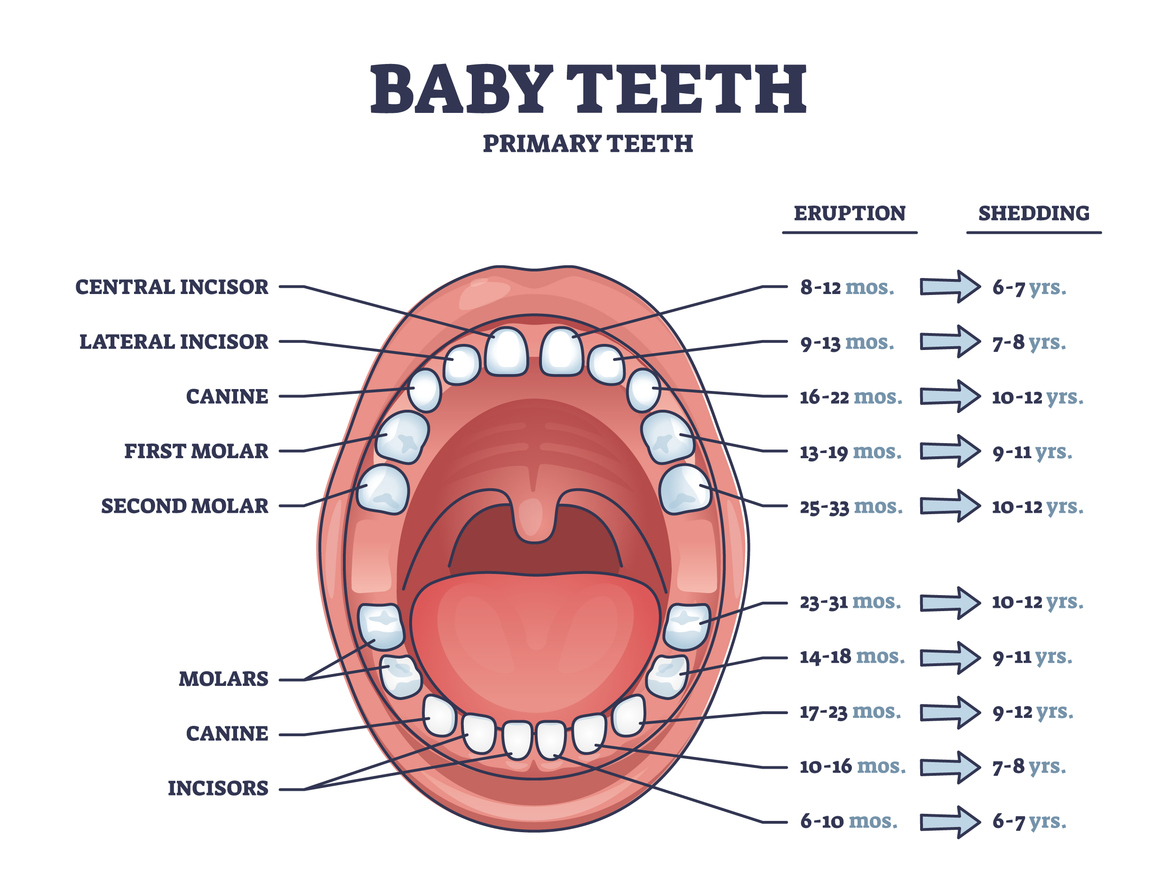 By about age 12 or 13, most children have lost all 20 baby teeth. Additional permanent molars, including wisdom teeth, usually erupt later during the teenage years or early adulthood and do not replace baby teeth.
Every Child’s Smile Develops at Its Own Pace
The age at which children lose baby teeth can vary. Genetics, the age when the baby teeth first appeared, and individual growth patterns all play a role. While there is a typical timeline, children do not all lose their baby teeth on exactly the same schedule.
Regular dental visits can give you peace of mind as your child’s smile grows and changes. During each visit, Dr. McMurphy monitors how your child’s baby teeth and permanent teeth are developing, answers your questions, and lets you know if any additional evaluation is recommended.
When Permanent Teeth Begin Coming In
As baby teeth loosen and fall out, the permanent teeth underneath gradually begin moving into place. During this transition, some parents notice a permanent tooth beginning to appear before the baby tooth has fallen out.
This situation is commonly called “shark teeth” because it temporarily creates the appearance of two rows of teeth. Although it can look surprising, it is a common part of dental development and most often occurs behind the lower front baby teeth.
In many cases, the baby tooth will loosen and fall out naturally as the permanent tooth continues to erupt. Encourage your child to gently wiggle the loose baby tooth, but do not try to force out a tooth that is still firmly attached.
If the baby tooth is not becoming loose or the permanent tooth continues to erupt behind it, schedule an appointment with McMurphy Pediatric Dentistry. Dr. McMurphy will examine your child’s teeth, evaluate how the permanent tooth is developing, and determine whether the baby tooth simply needs more time or whether removing it is the best option.
When a Baby Tooth Is Lost Too Early
Most baby teeth fall out when the permanent tooth underneath is ready to take its place. When a baby tooth is lost much earlier than expected, the neighboring teeth can gradually shift into the empty space. This can reduce the room available for the permanent tooth when it is ready to erupt.
Sometimes a baby tooth is lost early because of a dental injury. Depending on your child’s age and which tooth was lost, Dr. McMurphy may recommend monitoring the area or using a space maintainer to help preserve the space for the permanent tooth.
If your child has a dental injury, knowing what to do right away can make a difference. Be sure to read our blog on Pediatric Dental Emergencies to learn how to respond to common dental injuries and when immediate dental care is needed.
Helping Your Child Through Tooth Loss
There are several simple ways you can help your child during this stage of development:
- Encourage your child to gently wiggle loose teeth rather than forcing them out.
- Continue brushing twice each day and flossing daily, even around loose teeth.
- Offer nutritious foods and limit sugary snacks and drinks.
- Keep regular dental visits so Dr. McMurphy can continue monitoring your child’s developing smile.
- Encourage your child to avoid pulling on a tooth that is still firmly attached. Most baby teeth will fall out naturally when they are ready.
If you would like to learn more about caring for baby teeth, the American Dental Association’s MouthHealthy website offers additional information for parents.
Keeping Your Child’s Smile Healthy
Losing baby teeth is a natural part of growing up, and every child follows a slightly different timeline. While the exact timing varies from child to child, understanding the general pattern of tooth loss can make this stage a little easier for both you and your child.
Regular dental visits give you the peace of mind of knowing your child’s developing smile is being monitored. Dr. McMurphy can answer your questions, track how permanent teeth are coming in, and identify potential concerns before they become bigger problems.
Regular dental visits help ensure your child’s smile continues to develop as expected. Schedule your child’s next dental visit with McMurphy Pediatric Dentistry, and let our team answer your questions and guide you through every stage of your child’s developing smile.
Frequently Asked Questions
How long does a loose baby tooth usually stay loose?
There is no set timeline. Some loose baby teeth fall out within a few days, while others may remain loose for several weeks. Encourage your child to gently wiggle the tooth, but do not force it out if it is still firmly attached.
Is it okay if my child swallows a baby tooth?
Yes. Although it can be surprising, swallowing a baby tooth is usually not harmful. The tooth will typically pass through the digestive system naturally. If your child begins coughing, choking, or has difficulty breathing after a tooth comes out, seek medical attention immediately because the tooth may have been inhaled instead of swallowed.
Why does a loose baby tooth sometimes hurt?
As a baby tooth loosens, the surrounding gums can become tender. Children may also experience mild discomfort as the permanent tooth begins moving into place beneath the gums. If your child has significant pain, swelling, or signs of infection, schedule an appointment with McMurphy Pediatric Dentistry.
What if a permanent tooth does not come in after a baby tooth falls out?
Permanent teeth do not always appear immediately after a baby tooth is lost. In many cases, it can take several months for the permanent tooth to erupt. If you are concerned about the delay, Dr. McMurphy can evaluate your child’s smile and determine whether the tooth is developing as expected.
